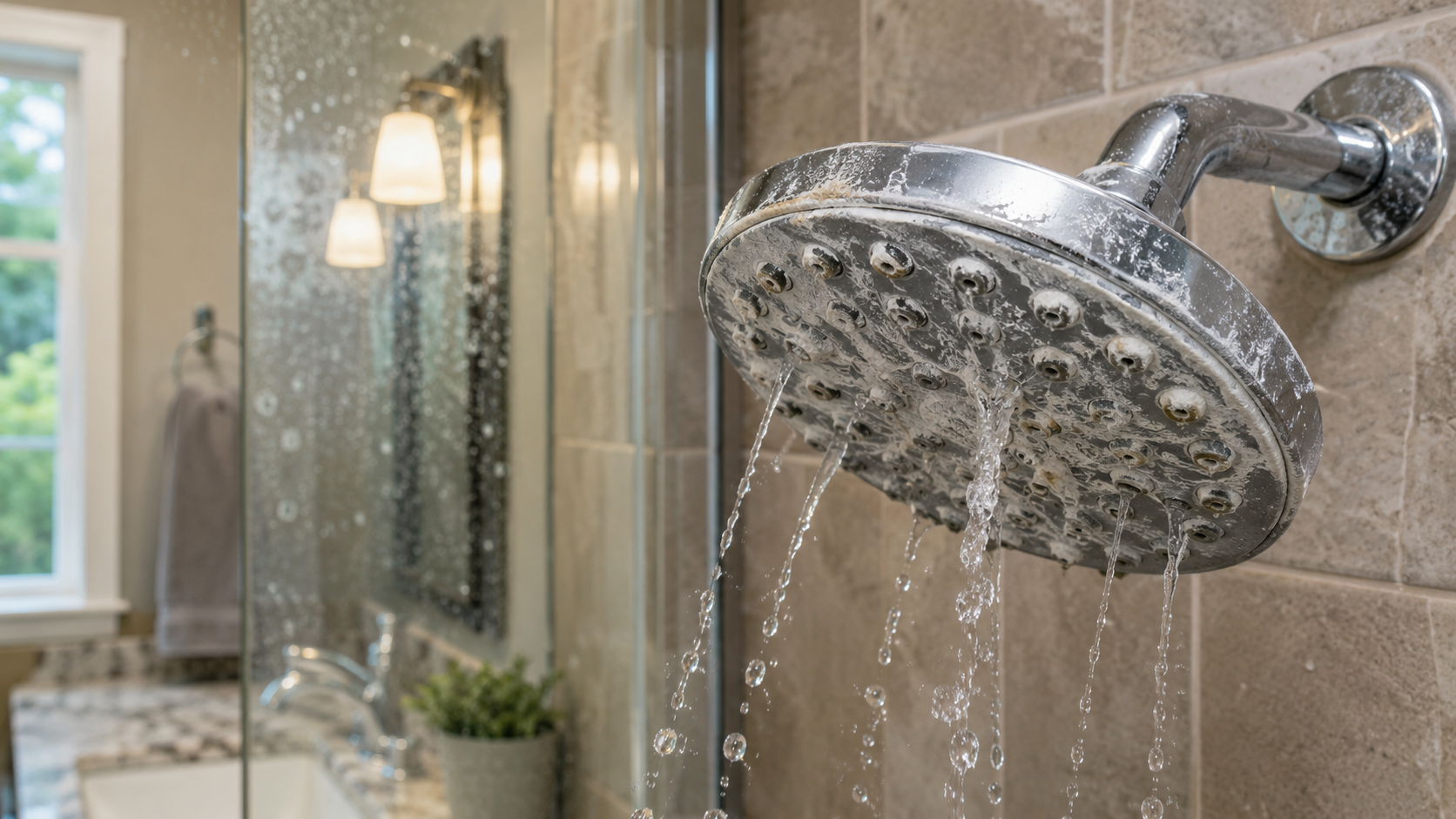
Go look at your showerhead. We’ll wait.
If you’re like most homeowners around Nashville, there’s a crusty white ring around the nozzles, maybe a few of them spraying sideways. That crust is dissolved limestone, and it’s not just on your showerhead. It’s inside your pipes, coating the bottom of your water heater, and slowly working on every appliance in your house that touches water.
Middle Tennessee sits on a giant slab of limestone bedrock. Our water spends its whole journey filtering through that rock, picking up calcium and magnesium the entire way. By the time it comes out of your tap, it’s what water folks call “hard,” and Nashville’s water is reliably on the hard end of the scale.
It’s perfectly safe to drink. Your plumbing, though, has opinions about it.
Spotty glasses. Soap that won’t lather. Stiff towels. Soap scum that reappears three days after you scrubbed the shower door. Every Nashville homeowner knows this list by heart, and most of us just accept it as the price of living here.
Fair enough. But those visible annoyances are the mild symptoms. The mineral content causing them is doing quieter, more expensive work behind your walls.
Every gallon of hard water that moves through your plumbing leaves a little something behind. Minerals deposit on the inside of pipes in a layer called scale, and year after year, that layer thickens.
Picture a highway losing a lane every decade. Water pressure that was strong when you bought the house gets a little weaker, then a little weaker still, so gradually you barely notice. In older Nashville homes with galvanized steel pipes, and there are a lot of those in our established neighborhoods, scale teams up with corrosion and the narrowing happens even faster.
So if you’ve caught yourself thinking the shower just doesn’t hit like it used to, you’re probably not imagining it.
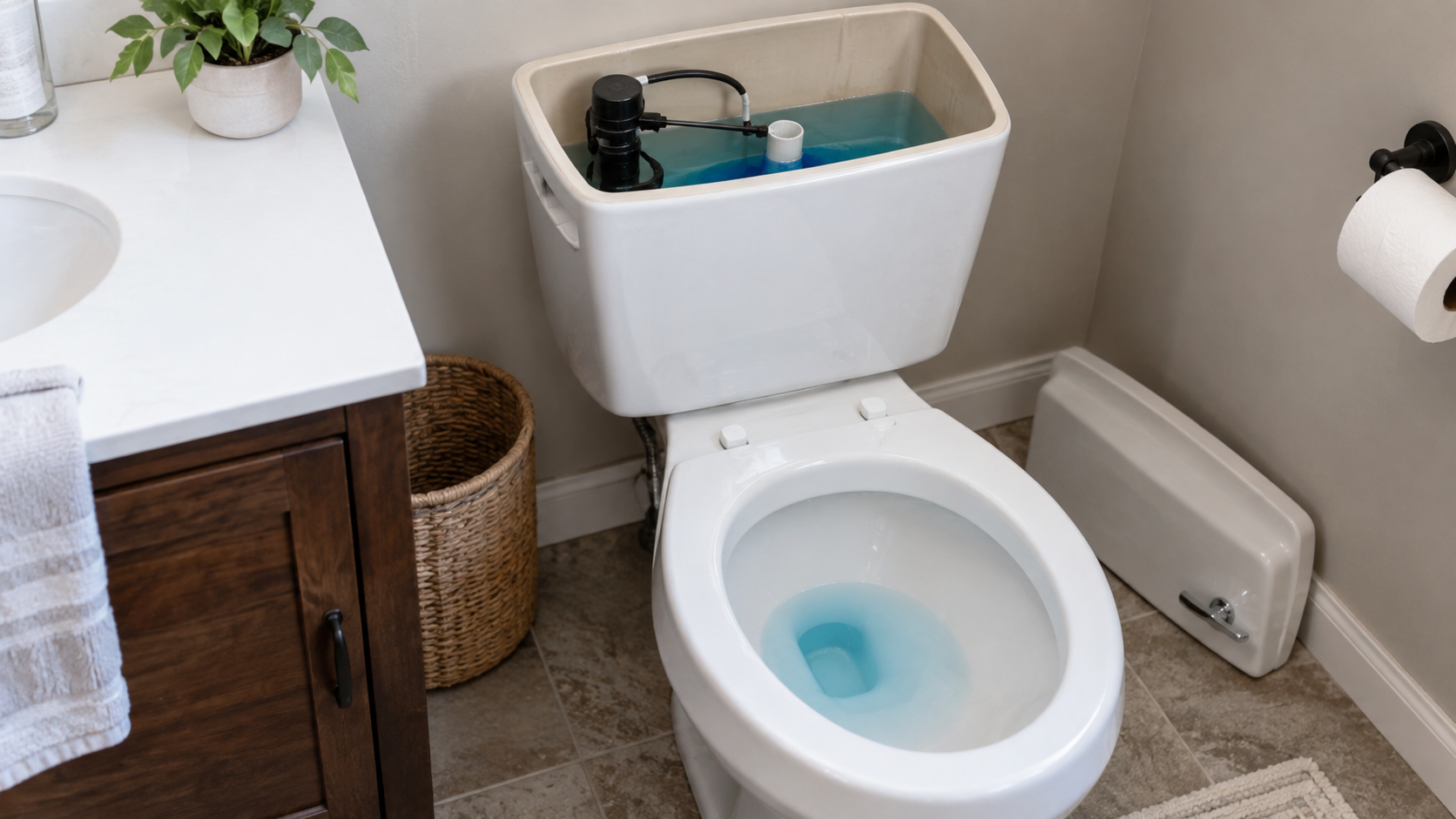
Here’s a question we hear all the time on service calls: “Why does my water heater make that rumbling sound?”
The answer is almost always sediment. When hard water gets heated, the dissolved minerals fall out of solution and settle at the bottom of the tank. That layer builds until the burner is trying to heat water through an inch of rock dust. The rumbling and popping you hear is water bubbling up through the sediment bed.
That sediment layer costs you three ways. The heater burns more energy doing the same job, so your utility bill creeps up. The tank runs out of hot water faster than it used to. And the constant overwork shortens the unit’s life, often by years. In our area, hard water sediment is one of the most common reasons water heaters die before their time.
Tankless units dodge the sediment tank problem but collect scale on their heating elements instead, which is why every manufacturer tells hard water regions like ours to descale regularly. Few homeowners ever do, and the units pay for it.
An annual flush is cheap insurance for a tankless heater. If yours has never been flushed and it’s more than a few years old, that’s worth a conversation.
That white crust doesn’t stop at the showerhead. Scale clogs faucet aerators, gums up valve seats until they drip, dulls finishes, and builds up inside your dishwasher and washing machine the same way it does in your water heater. When a dishwasher starts leaving film on everything or dies at year seven instead of year twelve, Nashville’s water usually had a hand in it.
A jug of white vinegar handles the cosmetic stuff. Soak the showerhead, wipe down the faucets, run some through the dishwasher now and then. It dissolves scale on contact and costs almost nothing. It just doesn’t stop new scale from forming.
The actual cure: a whole-house water softener. A softener pulls the calcium and magnesium out before the water enters your plumbing, which means the scale simply stops. Pipes stay clear, the water heater stays clean, appliances last longer, soap lathers the way it’s supposed to, and the shower doors stay clean for weeks instead of days. In a limestone region like ours, it’s honestly one of the best things you can do for a house you plan to stay in.
Sizing and installing one correctly matters, though. A softener that’s wrong for your household size or water usage either wastes salt or fails to keep up, so it’s worth having someone look at your specific situation rather than grabbing whatever’s on the shelf.
Some of this is weekend-project territory, and we’ve just told you which parts. But call a plumber when the pressure has clearly declined over the years, when the water heater is rumbling or running out early, when multiple fixtures keep developing drips, or when you’re ready to talk softeners and want it done right.
And if your home is older and has never had its plumbing evaluated, decades of Nashville water may have done more inside those pipes than you’d guess. An assessment now beats a surprise later.
Hard water isn’t going anywhere. It’s part of living on limestone. But there’s a real difference between a house where it’s managed and a house where it’s been quietly winning for thirty years.
Steakley Plumbing serves Nashville and Middle Tennessee. Questions about hard water, low pressure, or a struggling water heater? Call us at 615.254.5325.