Storm season plumbing in Nashville comes down to one thing: heavy rain goes looking for the path of least resistance, and sometimes that path runs right through your house. A lot of the water problems we see after a big storm aren’t dramatic. They’re slow, quiet, and completely preventable if you know where to look before the sky opens up.
Here’s what’s worth checking around your home before and after the storms roll through.
Before you worry about water getting in, make sure the water outside is heading away from the house like it should.
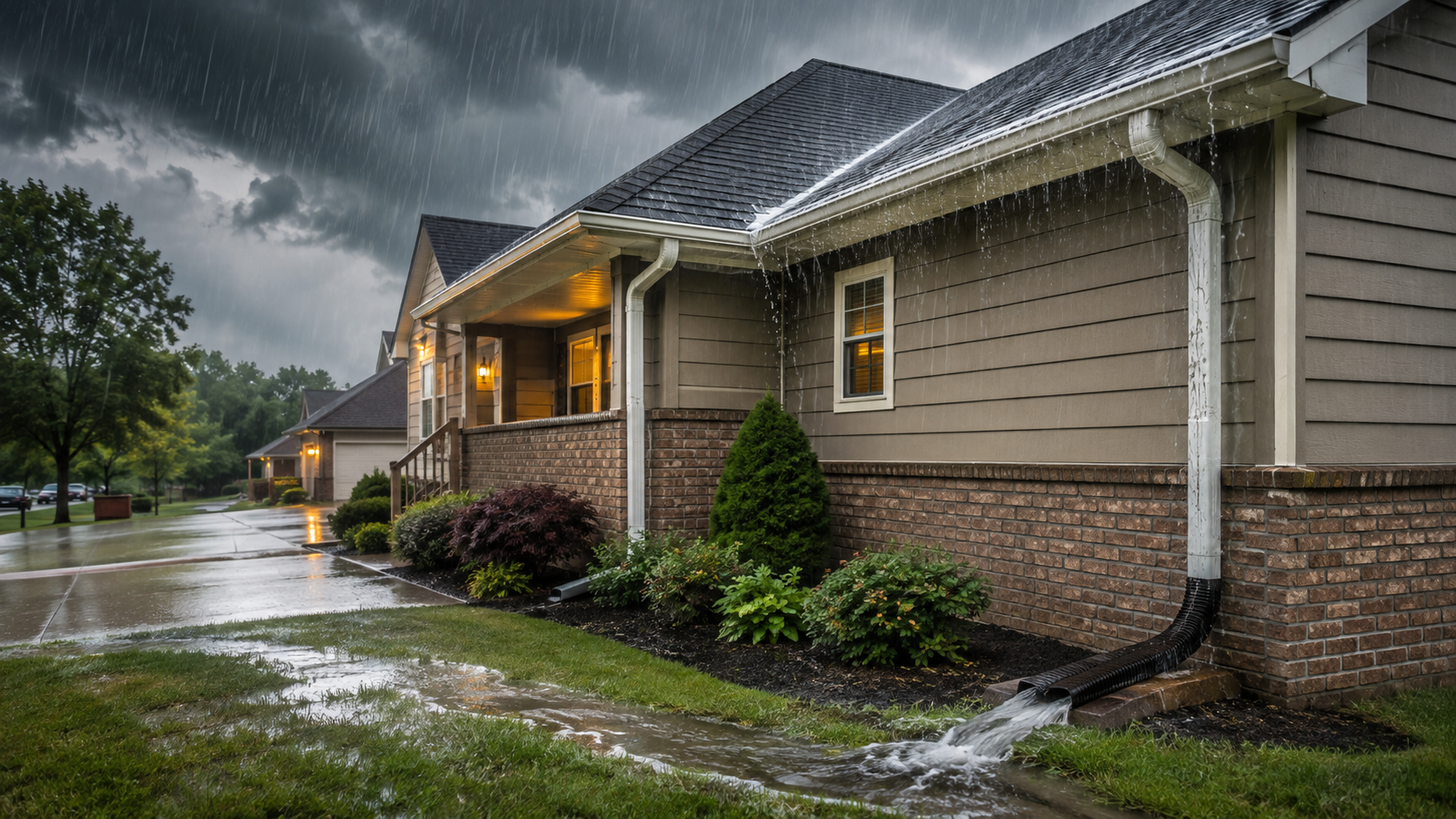
Walk your gutters and downspouts. If they’re clogged with leaves, rain sheets over the side and dumps right against the foundation. That’s the water that eventually finds its way into a crawlspace or basement. Clearing them is a boring job, but it’s the single biggest thing most homeowners can do to keep storm water out.
Then look at where the downspouts let out. If they’re dumping right at the base of the house, that water has nowhere to go but down along the foundation. Extensions that carry it a few feet out make a real difference.
If you’ve got a sump pump, storm season is exactly when it earns its keep, and exactly when people discover it stopped working months ago. The middle of a downpour is the worst time to find out.
Test it before the storms get serious. Pour a bucket of water into the pit and make sure the pump kicks on, moves the water out, and shuts back off. If it doesn’t run, runs weakly, or won’t shut off, get it looked at now while it’s dry. A pump that fails during a storm is how a finished basement becomes an insurance claim.
If your home floods and you don’t have a sump pump, it may be worth a conversation about whether one makes sense for your situation.
After a hard rain, take a walk through the low parts of your house. Basements, crawlspaces, the corners of the garage. You’re looking for damp spots, water stains, or that musty smell that means moisture is getting in somewhere.
Pay attention to where pipes and utilities pass through the foundation wall. Those penetrations are common entry points, and a gap you’d never notice on a dry day becomes a trickle during a storm. Catching it early means a small seal job instead of a mold problem.
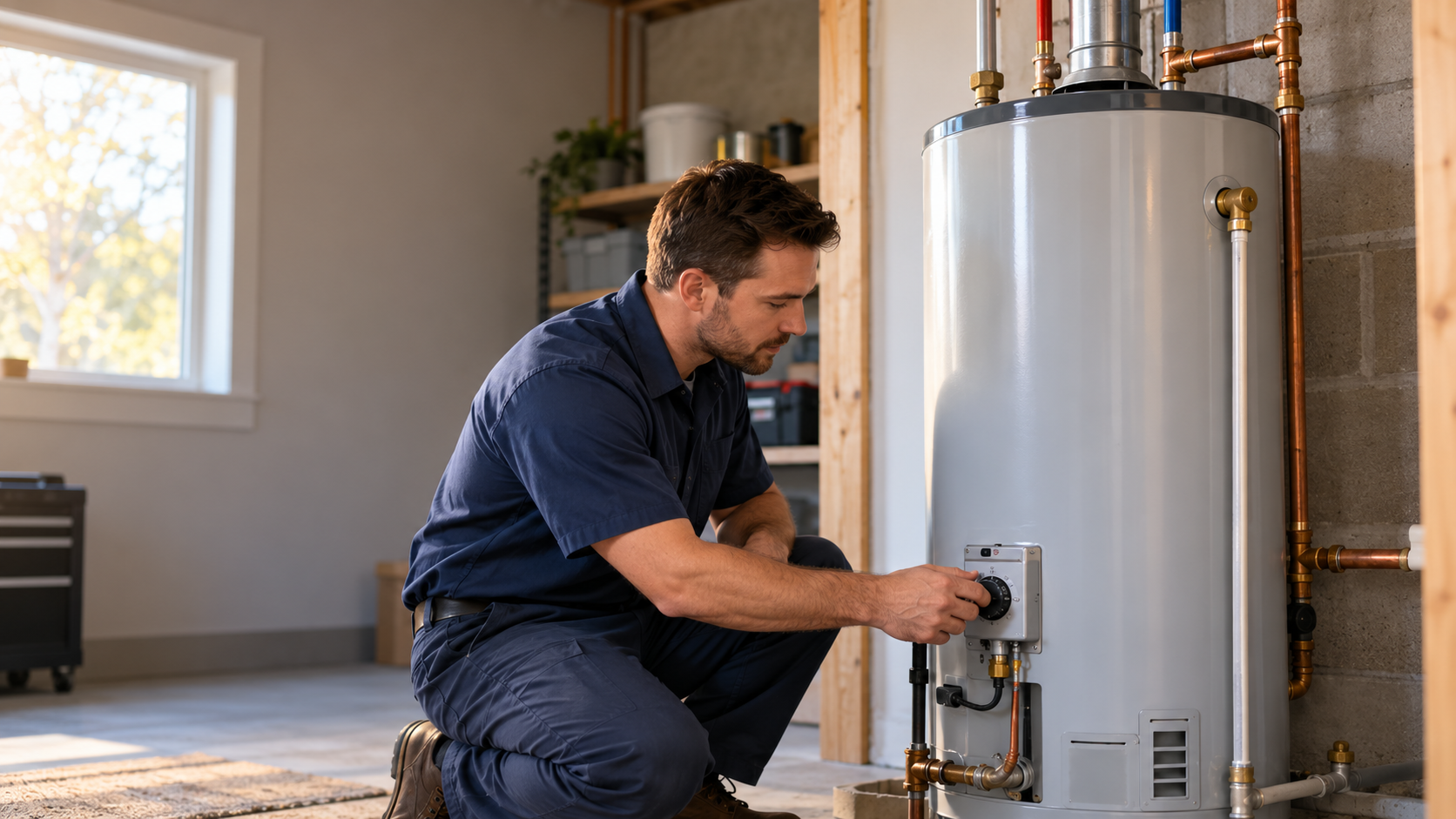
If your water heater, or anything else you’d rather not lose, sits on a basement or garage floor that could take on water, it’s worth thinking about now. Even a couple inches of water across a floor can damage a water heater sitting directly on it. Getting mechanicals up off the floor on a stand or platform is cheap insurance against an expensive replacement.
Once things dry out, do a quick pass:
Most of the time a storm passes and everything’s fine. But storms have a way of finding the weak spot you didn’t know you had, and the sooner you catch it, the smaller the fix.
If a storm left you with water where it doesn’t belong, or you want a hand getting your home ready before the next one, give Steakley Plumbing a call at 615.254.5325. We work all over Nashville and Middle Tennessee, and we’d rather help you stay ahead of the water than clean up after it.