A garbage disposal is one of those things you never think about until it stops working, usually with a sink full of water and a dinner party in an hour. The good news is that most disposals fail for reasons that are easy to avoid. Treat it right and it’ll run for years. Treat it like a trash can and you’ll be reaching for the phone.
Here’s the plain version of what to do and what to steer clear of.
Cold water is the simple habit that saves disposals. Run it before you turn the unit on, keep it running the whole time, and let it run a few seconds after. The water carries the ground-up food through the pipe instead of leaving it to sit and build up. Cold specifically, not hot, because cold keeps any grease firm so it moves on through instead of coating the inside of your pipes.
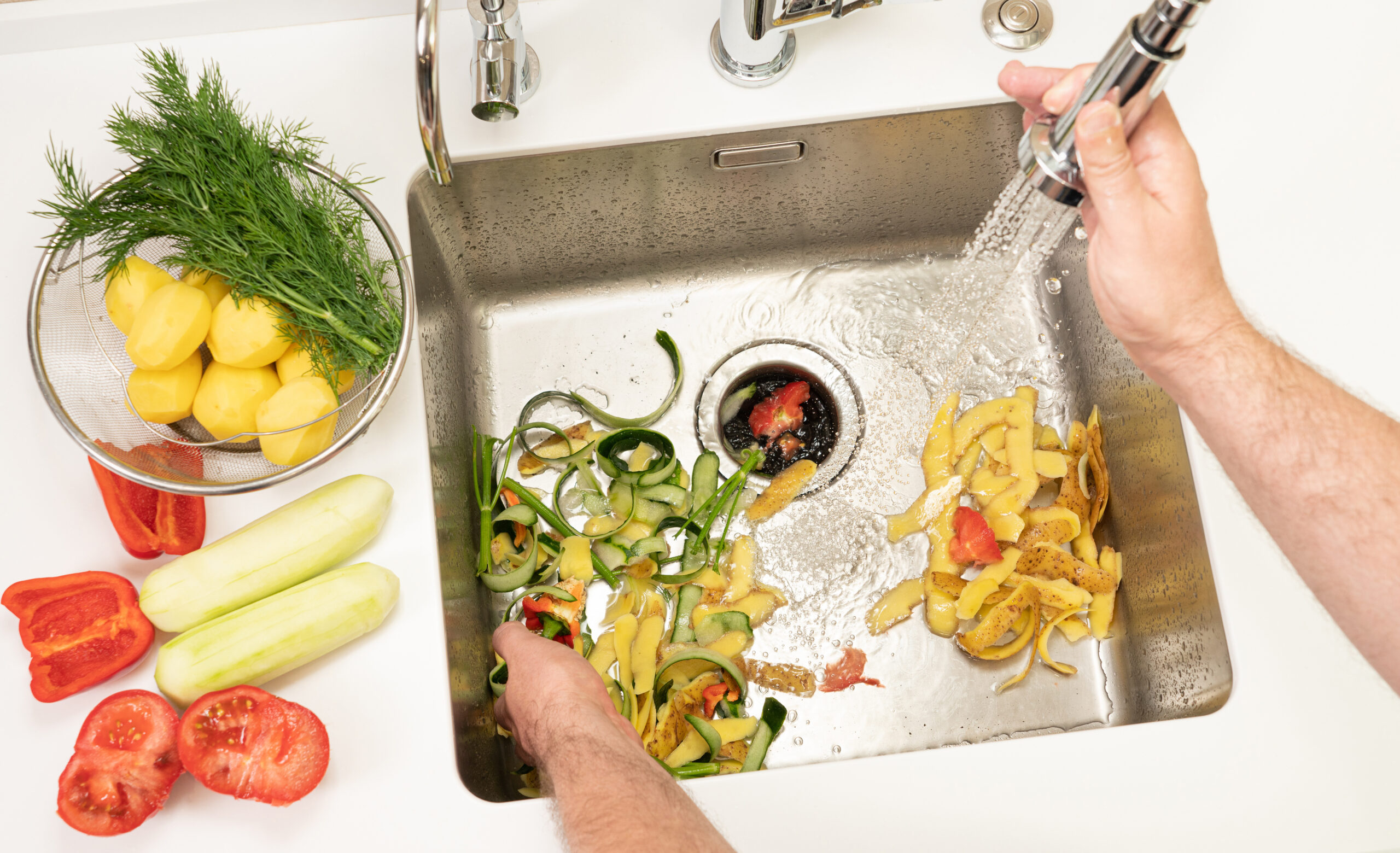
A disposal works best with a steady trickle of scraps, not a packed load all at once. Feeding it gradually lets it actually grind and clear before the next batch comes in. Cramming it full is how you end up with a jam.
Every so often, grind a few ice cubes to knock buildup off the grinding components. A little dish soap and cold water afterward helps with odor. If it’s smelling sour, a few citrus peels ground up with cold water freshen it up fine. You don’t need special products.
This is the big one. Grease goes down warm and liquid, then cools and hardens somewhere in your pipe where you can’t see it. Over time it builds into a clog that catches everything else. Bacon grease, cooking oil, the fat off a pan, all of it goes in a can in the trash, not down the drain.
Some foods are just bad news for a disposal, even though it feels like they should be fine:
It’s a natural instinct, but hot water melts grease and lets it flow deeper into the pipe before it cools and hardens. Save the hot water for cleaning afterward. Grind with cold.
Before you assume the worst, try this. If the disposal just hums but doesn’t spin, it’s probably jammed, so turn it off at the wall. If it’s completely dead and silent, look underneath the unit for a small reset button, usually red. Press it. That reset trips when the motor overloads, and pressing it back in solves a surprising number of “broken” disposals for free.
If it hums, resets don’t help, or something is clearly stuck down in there, don’t go reaching in with your hand even with the power off. Give us a call and we’ll clear it safely.
A disposal that leaks underneath, keeps tripping the reset, won’t grind no matter what, or is old enough that repairs keep piling up is usually telling you it’s near the end. We can tell you honestly whether it’s worth a fix or whether you’re better off with a replacement, and handle either one.
If your disposal is acting up, or you’d rather not fish around under the sink yourself, give Steakley Plumbing a call at 615.254.5325. We work all over Nashville and Middle Tennessee, and this is exactly the kind of everyday fix we handle all the time.